
Are you tired of the high expense ratios and opaque portfolios of traditional mutual funds, yet still overwhelmed by the thought of picking individual stocks?
Imagine investing in the biggest ideas shaping India—like the growth of electric vehicles or the digital revolution—without needing to research 50 stocks yourself.
Smallcase makes thematic investing simple, transparent, and instantly actionable, putting the power of a fund manager’s research directly into your hands.
A Smallcase is a ready-made portfolio, or “basket,” of intelligently selected stocks and Exchange Traded Funds (ETFs) that represents a specific market idea, theme, or strategy. It allows you to invest in a concept, like “Rising Rural Demand” or “Electric Mobility,” with a single, simple click, while still holding the assets directly in your Demat account.
By the end of this comprehensive Smallcase 101 Guide, you will clearly understand how Smallcases work, how they fundamentally differ from mutual funds, how to select your first thematic portfolio based on your risk profile, and the simple steps required to start your journey in transparent, theme-based investing today.
What Exactly is a Smallcase?
A Smallcase is a ready-made, professionally curated basket of stocks or ETFs that reflects a specific investment idea, theme, or strategy (like “Electric Mobility” or “Top 100 Stocks”). It allows you to invest in a diversified portfolio with a single click, while giving you direct ownership and transparency over all the underlying shares in your own Demat account.
Thematic Investing
The single most defining feature of a Smallcase is that it allows you to practice Thematic Investing. Instead of looking at the market through the traditional lens of sectors (like “Banking” or “IT”) or market capitalization (“Large Cap” or “Mid Cap”), Thematic Investing is a forward-looking strategy that focuses on identifying and investing in long-term trends, ideas, or structural changes that are expected to reshape the economy.
Why it Matters to Smallcase
Idea First, Stocks Second: A Smallcase starts with a Theme that its expert managers believe will drive significant growth over the next decade.
- Example Theme: The Rise of Digital India.
- The Companies: The portfolio then includes a curated basket of stocks—which might cross different traditional sectors—that are the primary beneficiaries of this theme (e.g., a payment gateway company, a telecom giant, and an e-commerce logistics firm).
It’s Broader than a Sector
Sector Fund: Might only invest in banks (e.g., “Banking Sector Fund”).
Thematic Smallcase: An “Financial Disruption” Smallcase might include banks that are digitally transforming, FinTech start-ups, and companies that make payment software. It captures the entire ecosystem of the idea.
Thematic investing makes your portfolio relatable. You don’t just own a random list of stocks; you own the companies that are building the future you believe in—like Clean Energy, Rural Consumption, or Low Volatility.In short Smallcase is simply the modern, easy-to-use platform that packages complex, expertly researched Thematic Investing ideas into a single, one-click purchase.
Who Creates Them?
Smallcases are not just random collections of stocks; they are the output of professional, licensed research. The portfolios are primarily designed and managed by:
- SEBI-Registered Investment Advisors (IAs)
- SEBI-Registered Research Analysts (RAs)
- Brokerage Houses
- Financial Institutions
Why the SEBI Registration Matters:
- Trust and Credibility: The Securities and Exchange Board of India (SEBI) regulates these entities, ensuring they adhere to stringent quality standards, ethical practices, and regulatory guidelines. When you invest in a Smallcase, you are benefiting from the expertise of market professionals whose research and methodology have been vetted.
- Rule-Based Investing: These experts build Smallcases using a rules-based approach. This means the stocks are selected based on quantifiable, non-emotional criteria (like a company’s financial health, specific ratios, or market momentum), not on a hunch or personal bias.
- Active Management: The creators don’t just build the basket and walk away. They are responsible for monitoring the theme and the underlying stocks. When the market shifts, they provide periodic rebalance updates—suggestions to buy, sell, or adjust weights—to ensure the Smallcase remains true to its original investment theme and objective.
In summary: You are essentially outsourcing the heavy research and stock selection to certified experts, granting you access to institutional-quality portfolio management without having to pay the high fees of a traditional Portfolio Management Service (PMS).
Getting Started: The 4-Step Investment Process
Starting your thematic investment journey is surprisingly easy:
Step 1: Choose a Broker and Connect
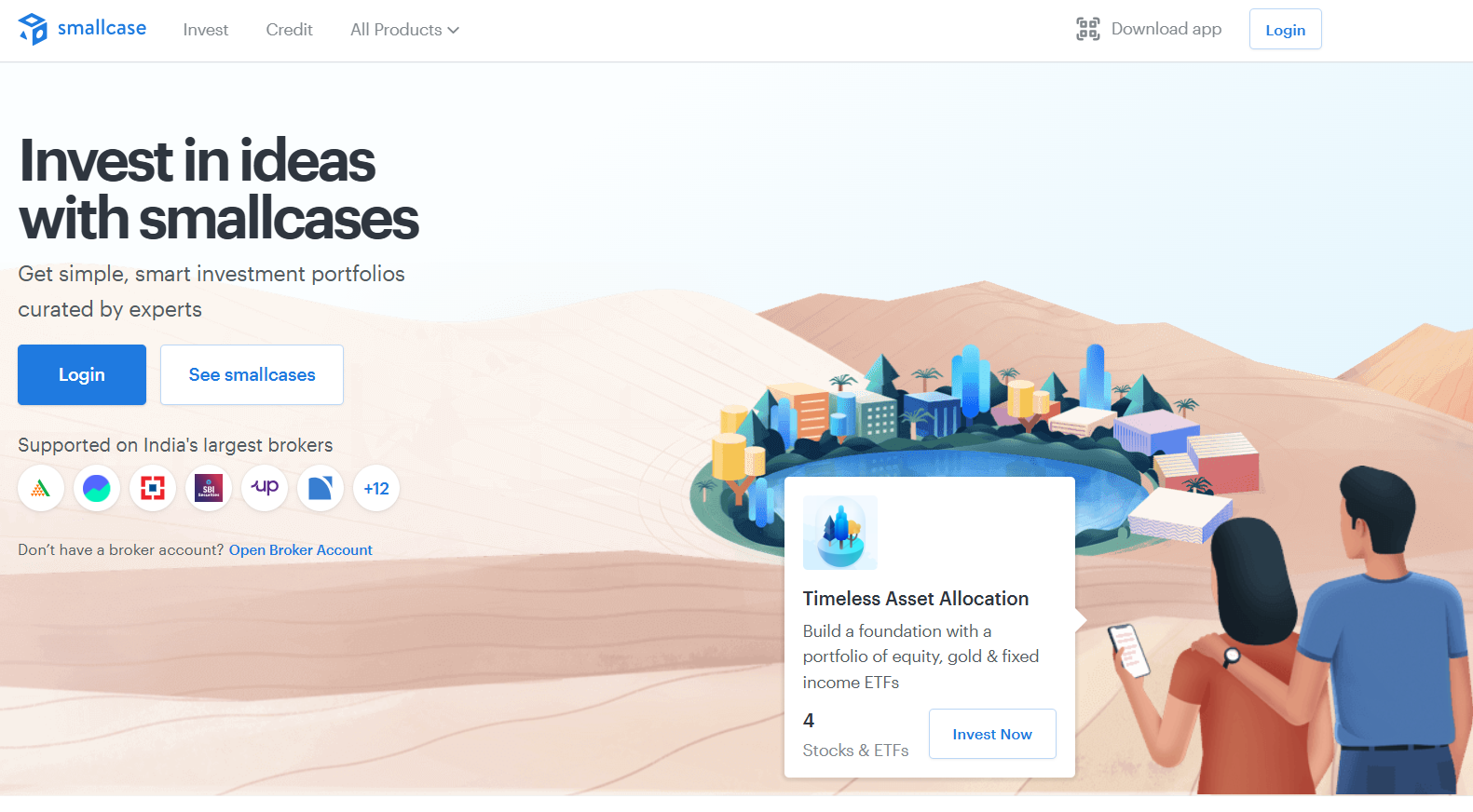
The Smallcase platform integrates seamlessly with India’s leading brokers (e.g., Zerodha, AngelOne, Upstox). Ensure your trading account is linked to the Smallcase platform. You can also login through this link: https://www.smallcase.com/#phone-login-modal
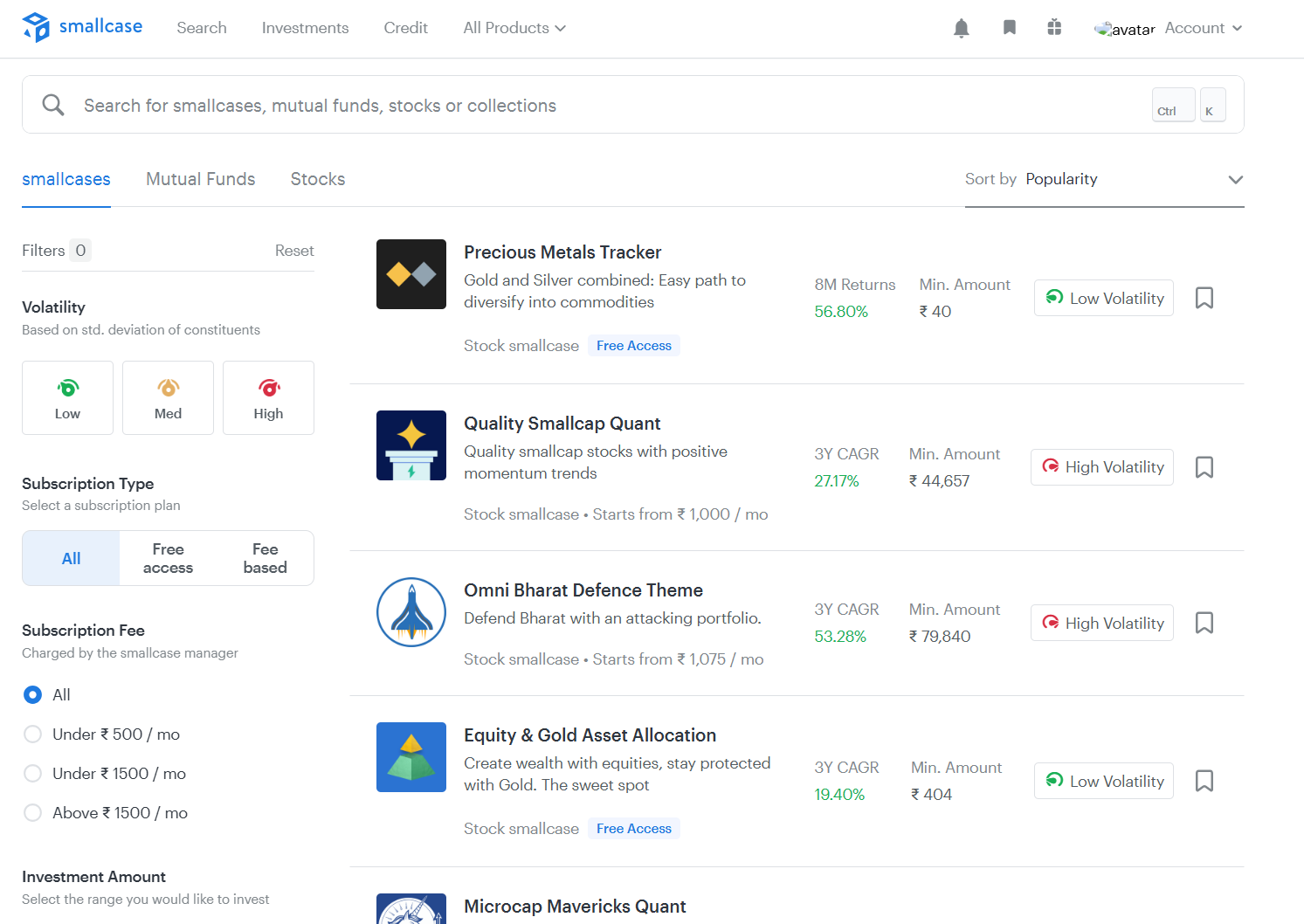
Step 2: Discover and Analyze
Smallcases are categorized to help you browse:
- Thematic: e.g., Rural Demand, Affordable Housing, Clean Energy.
- Sectoral: e.g., Banking & Finance, Pharma.
- Smart Beta: e.g., Low Volatility, High Momentum.
When selecting, look closely at the Minimum Investment Amount, the Risk Level, and the historical 1-Year Returns to gauge suitability.
Step 3: Invest (Lumpsum or SIP)
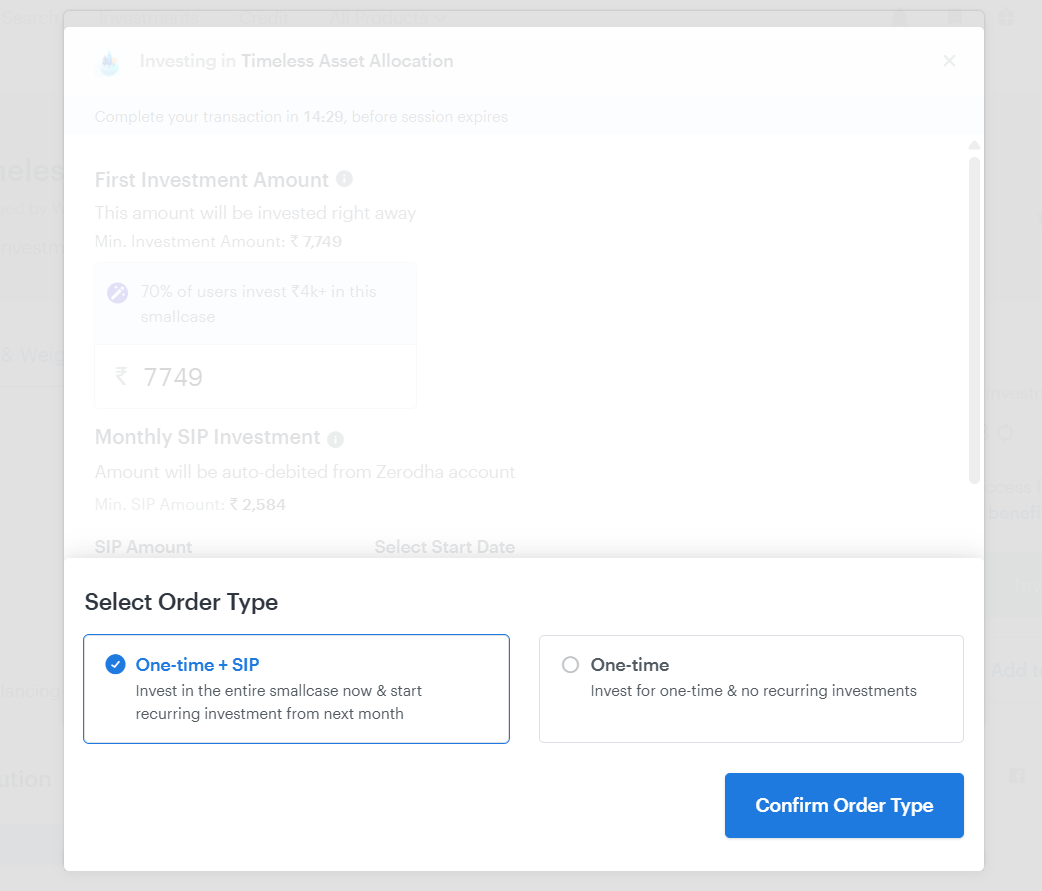
You have two primary ways to invest:
- Lumpsum: Invest the entire minimum amount at once.
- Smallcase SIP (Systematic Investment Plan): Automate smaller, fixed monthly investments.
Step 4: The Rebalance
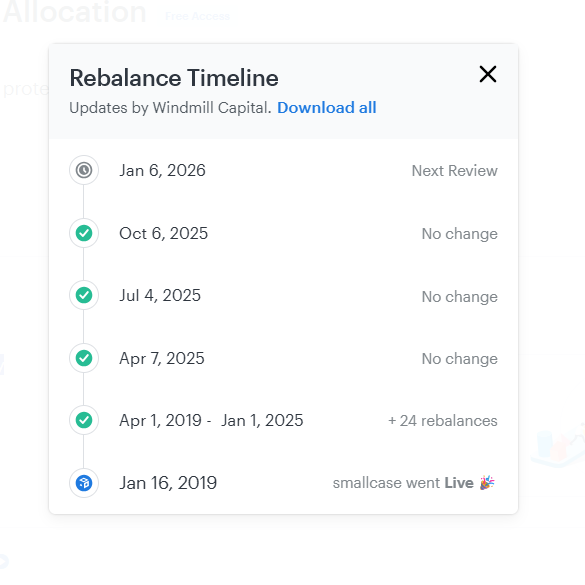
This is crucial. The Smallcase Manager periodically updates the basket to keep it relevant to the original theme. This process is called Rebalancing.
When a Rebalance is due, you will receive a notification to review and accept the changes (which may involve buying new stocks or selling existing ones). Your action is needed to keep the Smallcase optimized.
The Pros and Cons of Smallcase
As with any investment product, it’s vital to understand both the upside and the risks.
✅ Benefits
- Focused Growth: Allows direct, surgical exposure to specific megatrends like “Monopoly Stocks” or “MNCs in India.”
- Professional Management: The expertise of the Smallcase Manager saves you from continuous research and tracking.
- Ease of Use: Single-click transactions for both initial investment and rebalancing.
⚠️ Risks and Things to Watch Out For
- Thematic Risk: If the underlying theme fails to materialize (e.g., a shift in government policy), the Smallcase will underperform, even if the individual stocks are good.
- Fees/Costs: Subscription fees (monthly/quarterly) and transactional costs (brokerage/STT) can impact your net returns, especially on smaller investment amounts.
- Tax Impact: Since you directly own the stocks, every rebalance involving a sale triggers an immediate Capital Gains Tax event (STCG or LTCG).
Smallcases offer a modern, transparent, and efficient way to execute thematic investing in the Indian market. They are an excellent tool for beginners looking to move beyond basic index funds and mutual funds.
Our Final Tip: Start by allocating only a small portion (10-20%) of your total equity portfolio to thematic Smallcases. Treat them as your high-conviction, satellite investments.
➡️ Ready to start exploring themes like the Green Energy Transition or the Rural Consumption Story?
Click here to sign up with a partner broker and browse your first Smallcases today! Sign Up
Author Note:
Over the last few years, Smallcases have emerged as the most exciting product for modern Indian investors. I personally found the initial learning curve steep, which is why I created this “Smallcase 101” guide. My goal is to save you the research time and give you a structured path to confidently explore thematic investing.
I am a finance enthusiast and writer, not a SEBI-registered Investment Advisor. Please view all content herein as educational material. Investment decisions must be based on your personal financial assessment and risk profile.


Great 💡, Now I definitely invest in Smallcase